

Unrelished
Friendly little pots and "the saltness of time", as Falstaff had it

Alas, sad it is when a condiment (from the Latin “condire” … to preserve, to pickle) is neither preserved nor pickled, but passeth away like the snow on the mountainside.

The Gentleman’s Relish is no more (that bizarrely antique ‘The’ being part of the charm) … it is rolling off the shelves and into oblivion. The Times even reports panic buying …

I am sad that it is gone. The little pot I have in my fridge has been there for months, and will be there for months more. But it will - it now seems likely - be the last one.
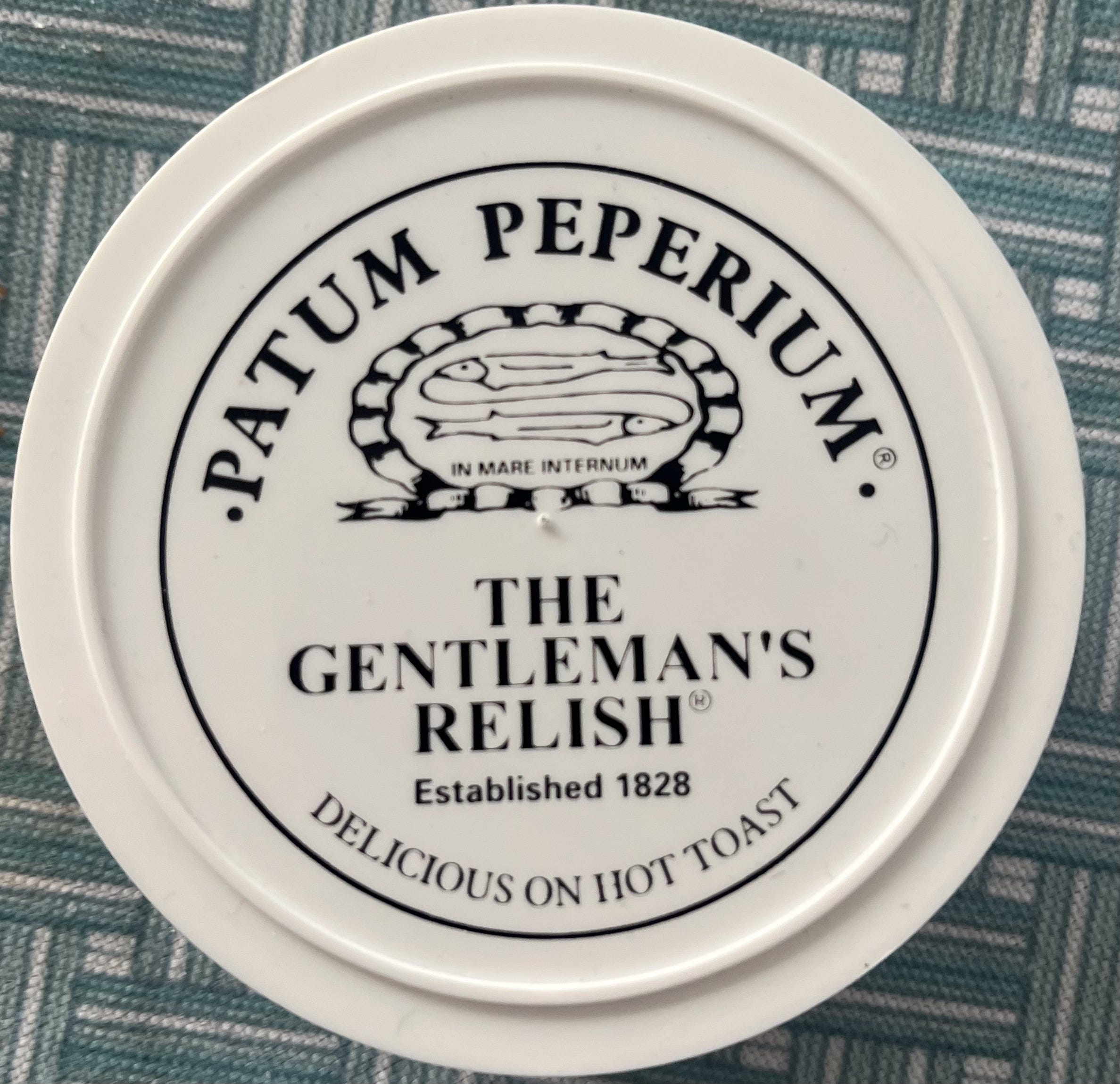
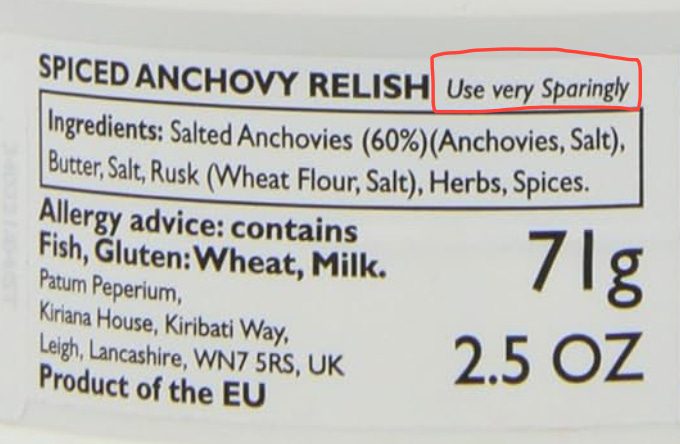
What hope had these strange little tubs in our squeezy, sugary age? In fact, it’s surprising they made it this far into the twenty-first century at all … for this was a product which actually told you only to use it “VERY SPARINGLY” … not merely sparingly, you see, but VERY sparingly.
For wasn’t there something oddly English about it … something which managed to go on despite telling the people who had bought some to BARELY USE IT. So modest, but with a quiet confidence that almost always stands behind modesty. “Oh crumbs,” says the pot, “you barely need any … in fact, you probably should ignore me altogether” … and, it seems, eventually … people did. Yet alongside its self-effacement was its lunatic intensity. Harry Sword, writing in Vice in 2015, said, “its bracing salt lick tang is offset against a warming cayenne spice: a fusty, ruddy-faced kick.”

Old-fashioned, of course, and with v uncomfortable memories of imperial behaviour … you can imagine it in hill stations and trenches, by roaring fires in little panelled rooms as GE Moore and Bertrand Russell debated ontology1. Harry Sword again: “it speaks of faded colonial grandeur, serious Victorian boozing, and the often staggering gluttony of the 19th-century upper-class British palate like absolutely nothing else.” It came from the end of the Georgian age, but I imagine it always as existing between say 1890 and 1930. To me, it feels Late Victorian, it feels Edwardian.
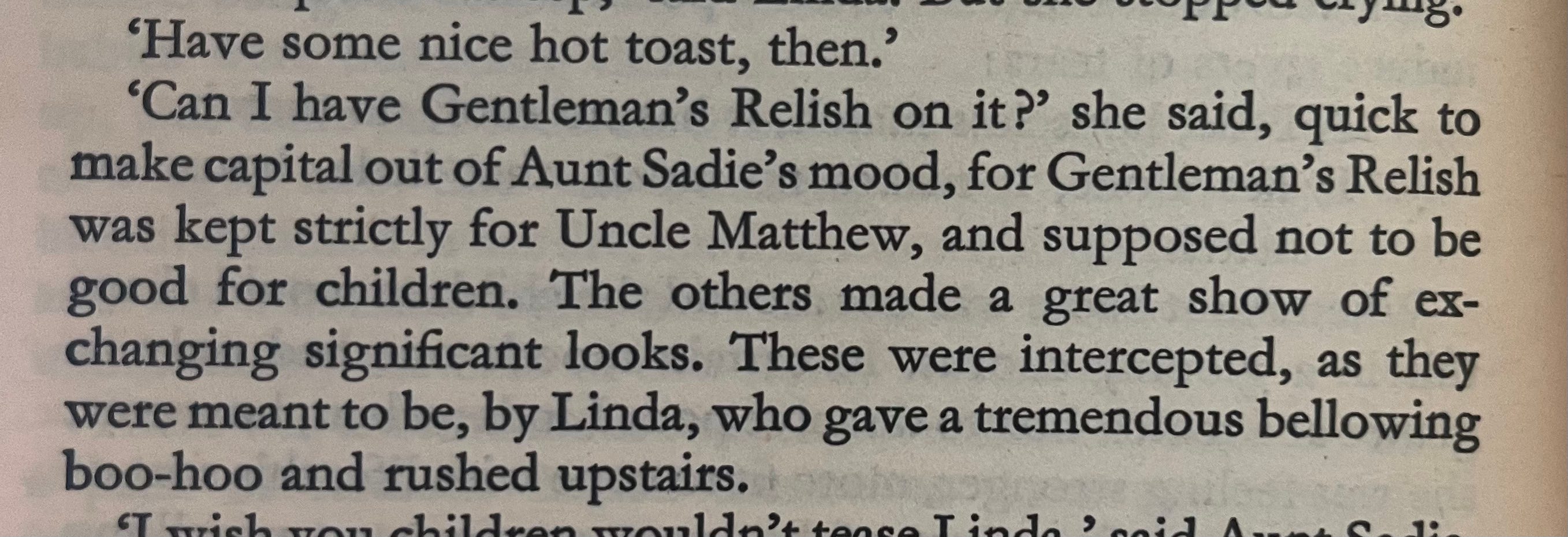
It was/is to be used sparingly - the flavour is a strong one, and required a great deal of butter to cut through it. Indeed, so powerful a flavour was it, that when it pops up in Nancy Mitford’s ‘The Pursuit of Love’ it is only the brutish Uncle Matthew who is allowed to eat it …
The flavour I wanted, with this salty grey paste, was to be achieved with a tiny smidge - like a single nib of cocoa - blended in with a great deal of butter on toast or crumpets … what you aimed for was the merest sense, the lightest whisper of salt floating on the very edge of the palate.
The taste, if one got it right, was what? There it was - some brackish, anchovial spirit - just on the edge of one’s gustatory perception … as gentle and distant as the sound of a hunting horn on a misty morning seven fields over … as light and moving as the sound of church bells a solid walk away.
Elsewhere, as Olivia Potts does in the Spectator, you find its history and its decline. You can read too how it is a small and strange institution (as Potts has it, “James Bond enjoys it in ‘For Your Eyes Only’. Nigella Lawson listed it as one of the ten British foods she couldn’t survive without. Jessica Mitford chose it as her luxury item on her 1977 episode of Desert Island Discs.”)
It is in the OED too, both under ‘Gentleman’s Relish’ and ‘Patum Peperium’. There’s something charming to imagine the donnish word-wranglers over there trying to make sense of the joke - the etymology section is a delight:

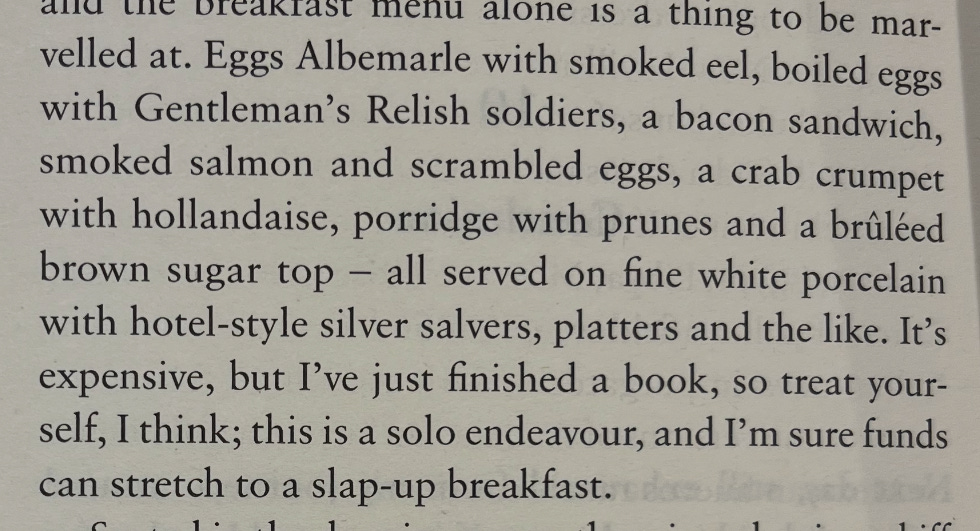
In Ben Benton’s survey of British food, ‘All You Can Eat: The Search For a New British Menu’, at the very end he imagines going to have a slap up breakfast at Brown’s and imagines the menu … and there it is, Gentleman’s Relish on the soldiers (I think, at the time, they actually made their GR themselves and now it doesn’t seem to appear on the menu at all). Yet there it is … luxurious and old-fashioned:
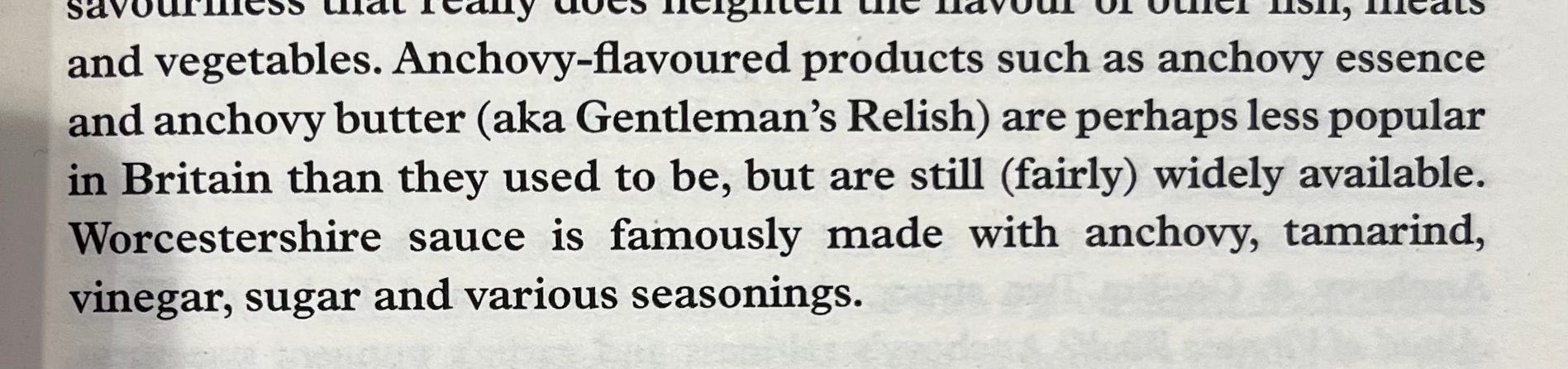
In Niki Segnet’s The Flavour Thesaurus she writes, in her section on anchovies that anchovy-flavoured products are “perhaps less popular in Britain than they used to be” …
Alas it is so … they are gone. Over confident, too powerful, self-effacing and ultimately wrong for the time. In Henry IV Part 2, Falstaff is talking to the Lord Chief Justice, and says
“your Lordship, though not clean past your youth, have yet some smack of an age in you, some relish of the saltness of time in you …”
Relish of the saltness of time … was Shakespeare was thinking of Gentleman’s Relish? Perhaps. He did die 212 years before it was created. Yet, as always, he knew …
[I actually popped to the local Sainsbury’s and there was one left … so I have a little more to comfort me]
Before dashing off to the Wren Library.